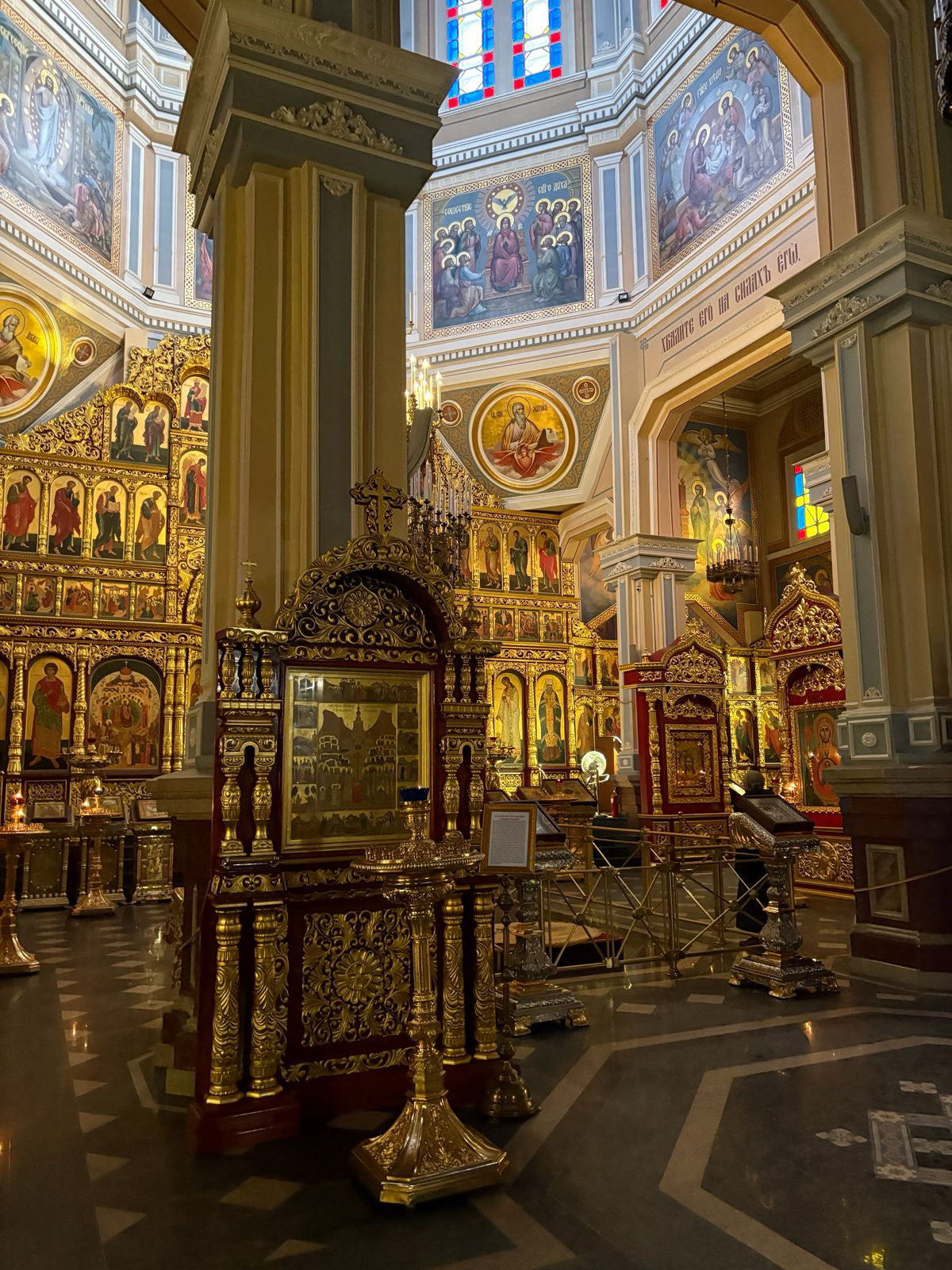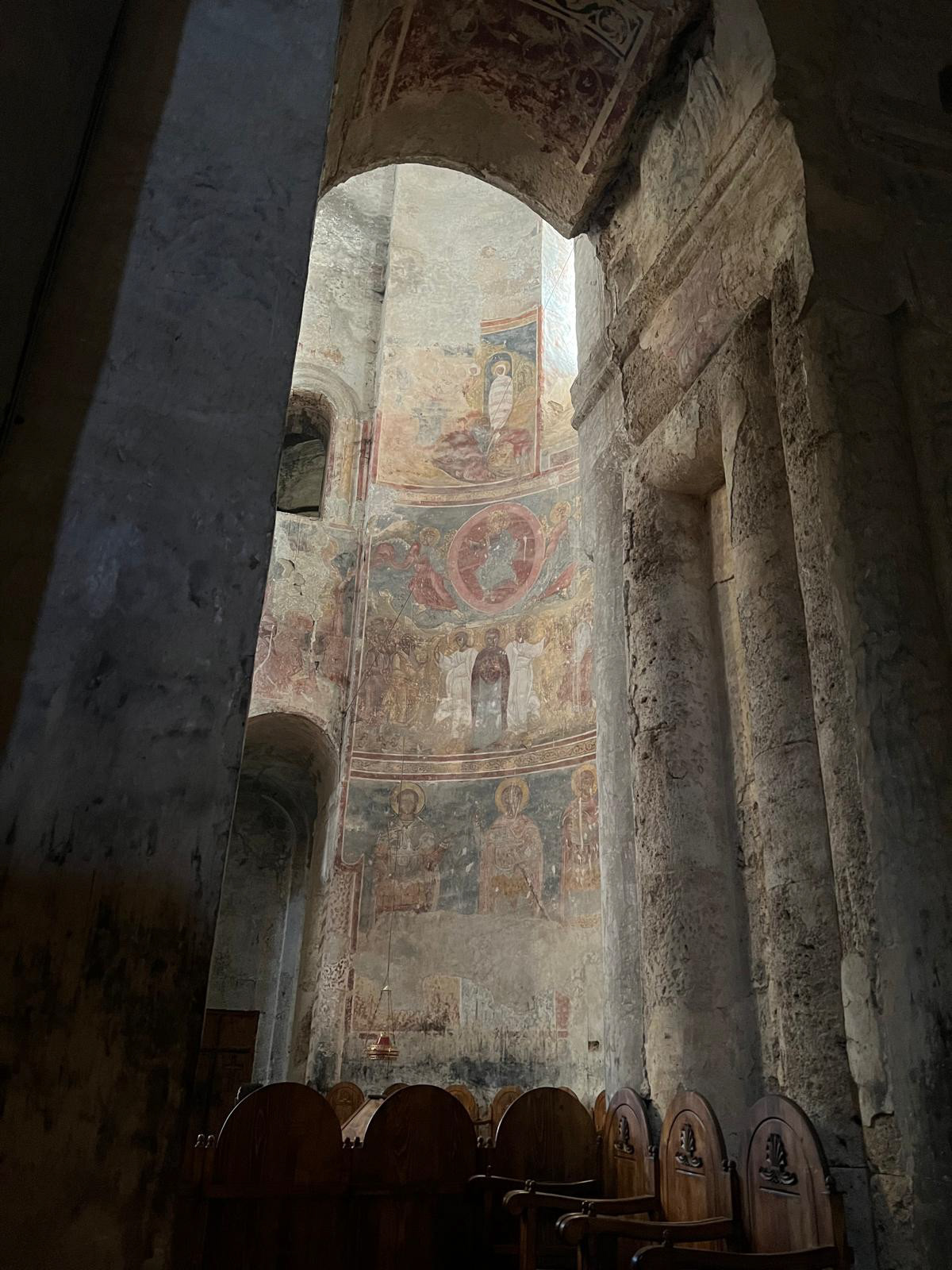
Perched in the mountains of northeastern Georgia, the Alaverdi Monastery was founded in the 6th century by the Assyrian monk Joseph Alaverdeli, who came from Antioch. The site was formerly dedicated to the Moon, and Joseph built a small church there in honor of Saint George. In the 11th century, the king of Kakheti, Kvirike III, commissioned the construction of the Alaverdi Cathedral in place of the old church. At 55 meters tall, it remains today the second tallest religious building in Georgia, just behind the Sameba Cathedral in Tbilisi.
The monastery has endured turbulent centuries: earthquakes, Persian and Lezgin invasions, before being restored in the 15th century by King Alexander I. Today, the complex includes the Saint George Cathedral, a monastery for men, three-story cells, baths, a wine cellar, as well as vineyards and apiaries maintained by the monks.
The interior of the cathedral is decorated with medieval frescoes depicting the lives of saints, and the tombs of figures such as Saint Joseph of Alaverdi, the martyr Ketevan, and several kings of Kakheti recall the history of the site. Every year, the Alaverdoba festival attracts pilgrims who come from afar to attend the ceremonies.
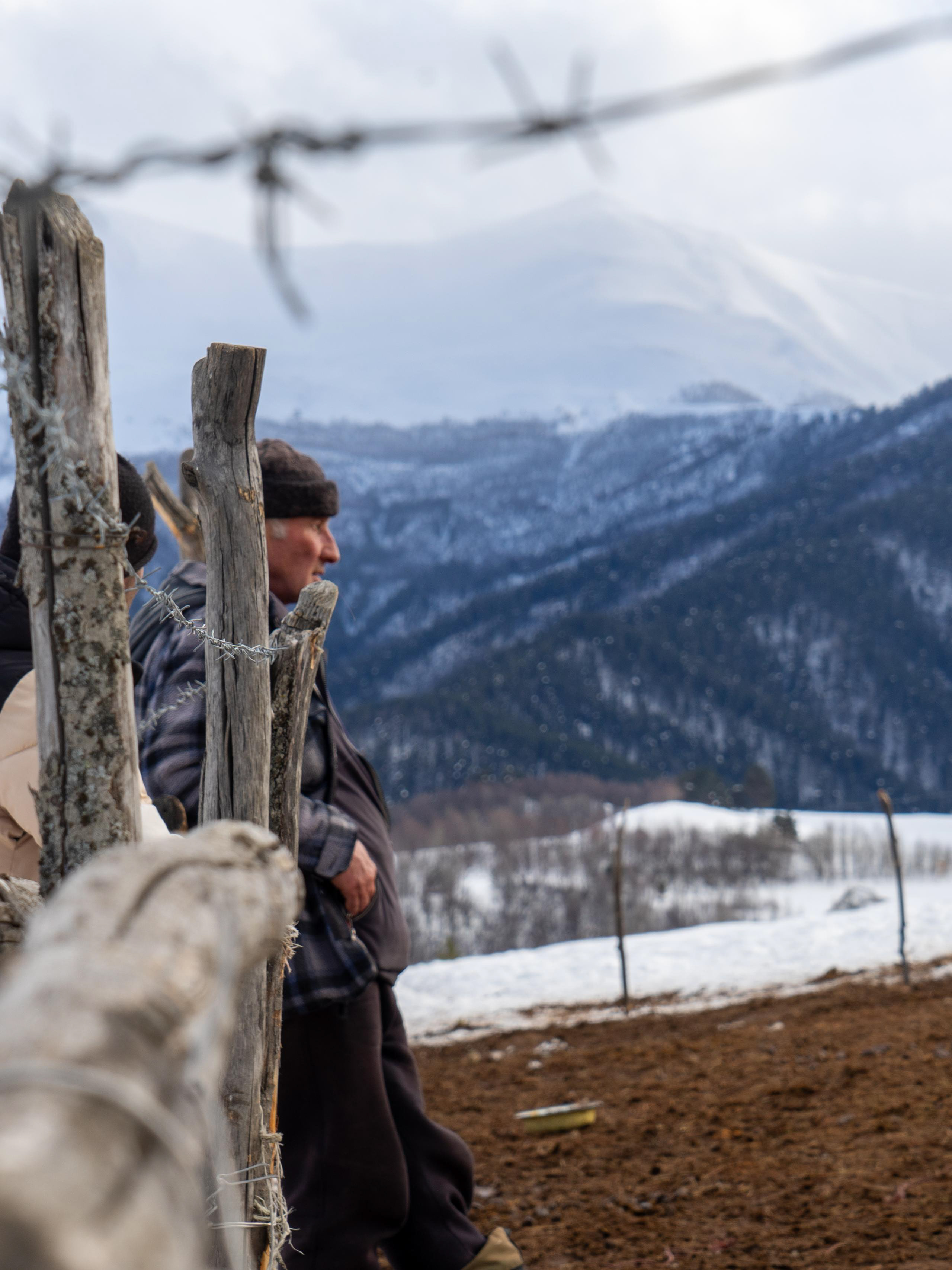
In this region, the figure of Saint George is omnipresent. But here, he is not only called Giorgi: he is also known as Tetri Giorgi, “George the White.” In the local tradition, he is the protector of horsemen, shepherds, and travelers crossing the mountains.
In some villages of Kakheti and Tusheti, residents tell that when a rider gets lost in fog or snow, Tetri Giorgi appears in the form of a white horse to show him the way. This image of the saint on horseback, widely found in Georgian iconography, symbolizes divine protection over the land and livestock.
Every year, the Tetrigiorgoba, celebrated on August 14, transforms the villages: families climb up to the churches on the heights, light candles, and share bread, cheese, and wine. Some still uphold a very ancient tradition: the sacrifice of a sheep, a ritual blending Christian rites with pre-Christian practices.