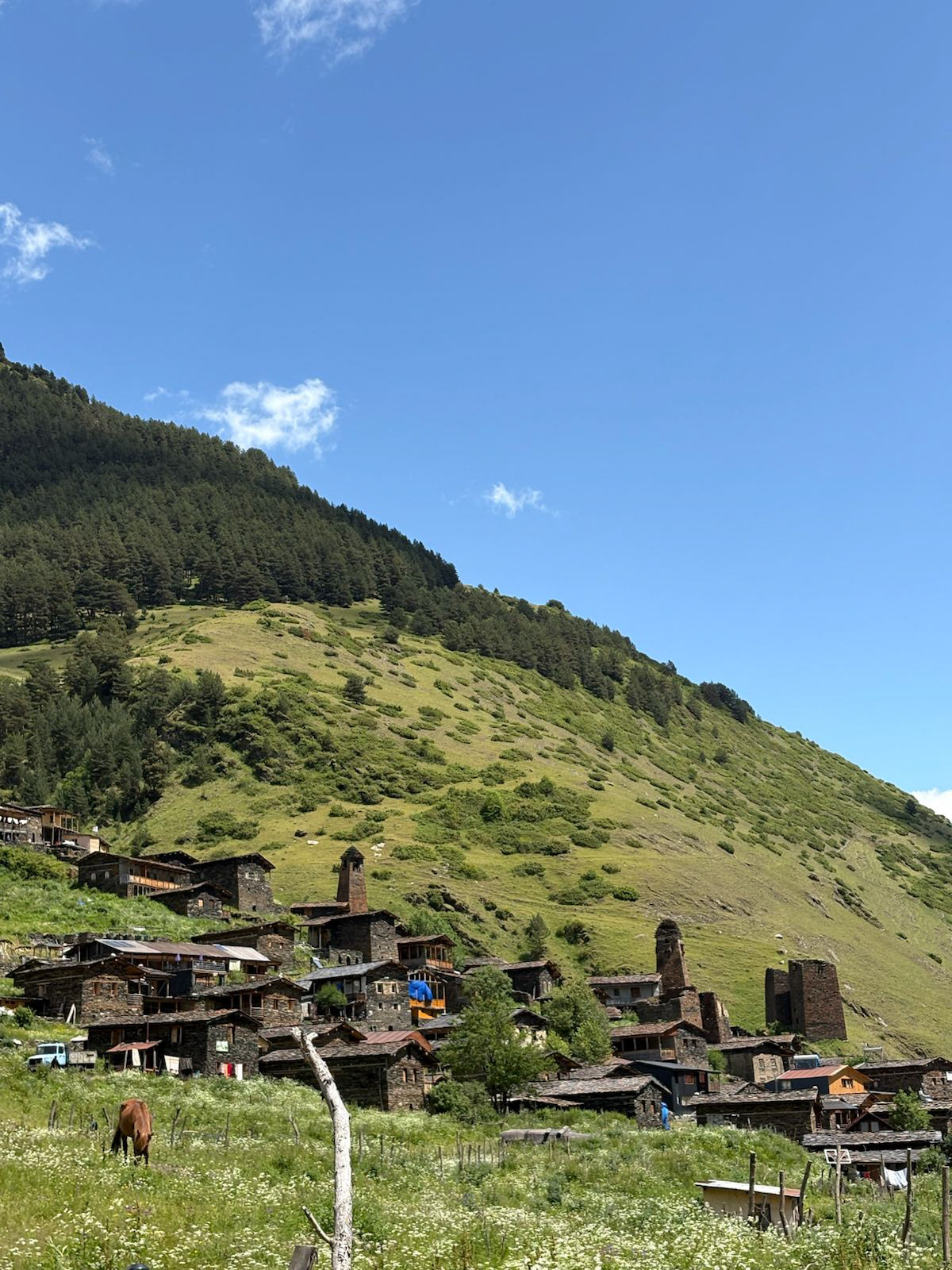
The inhabitants use flat stones, close to slate, which they stack without mortar.
Isolated, these stones are fragile; assembled, they form walls capable of withstanding wind, frost, and winters. Stone was notably used to build fortresses, such as those of Keselo, located above the village of Omalo. They were constructed in the 13th century, in the 1230s, during the Mongol invasions of Georgia.
Isolated, these stones are fragile; assembled, they form walls capable of withstanding wind, frost, and winters. Stone was notably used to build fortresses, such as those of Keselo, located above the village of Omalo. They were constructed in the 13th century, in the 1230s, during the Mongol invasions of Georgia.
The region's inhabitants erected a set of defensive towers on the rocky ridges overlooking the valley. They allowed monitoring of roads and attacks.
In case of raids—first from Mongols, then later from groups from neighboring Daghestan—families took refuge in these towers. Their elevated position and narrow openings facilitated defense.
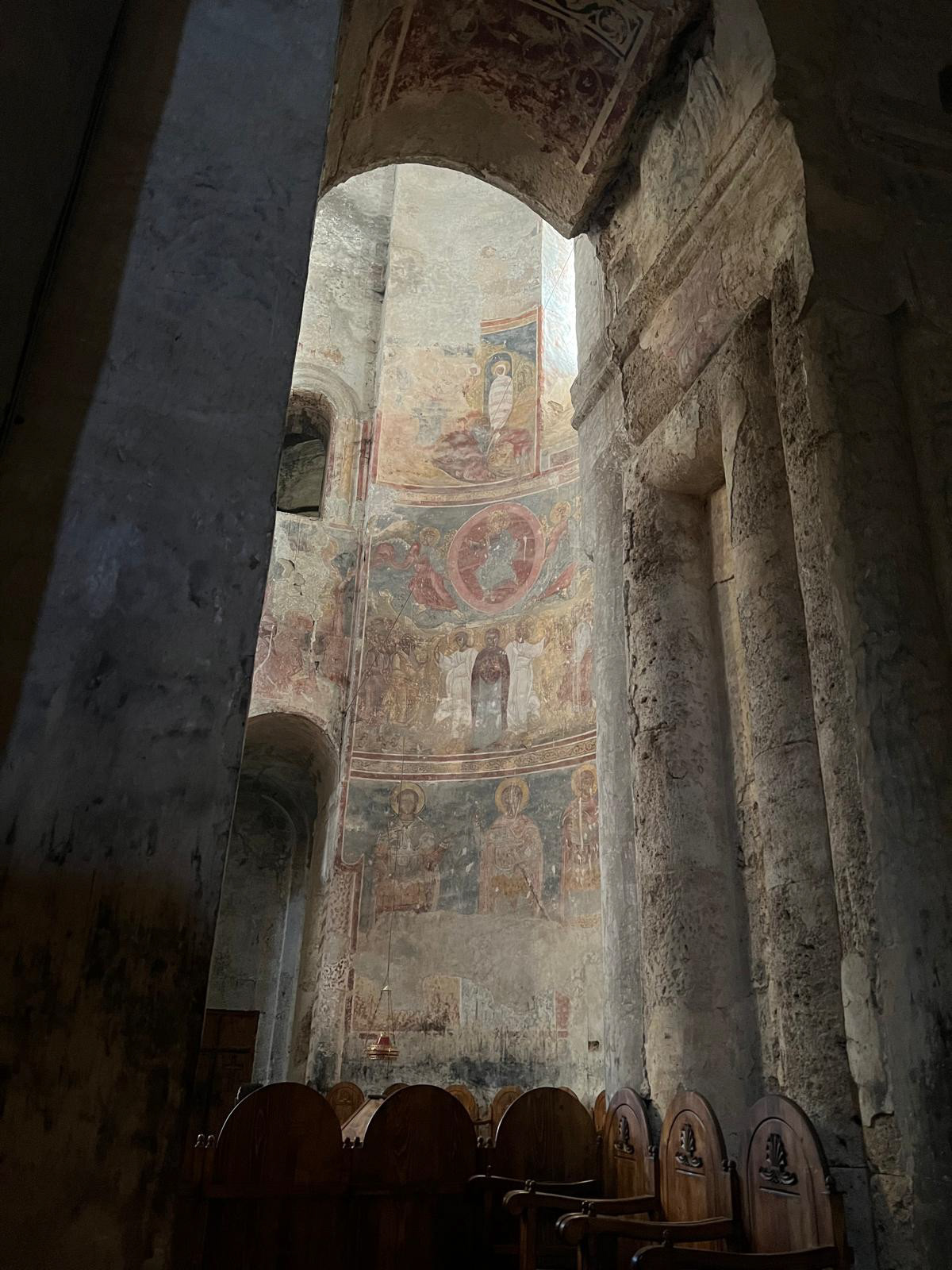
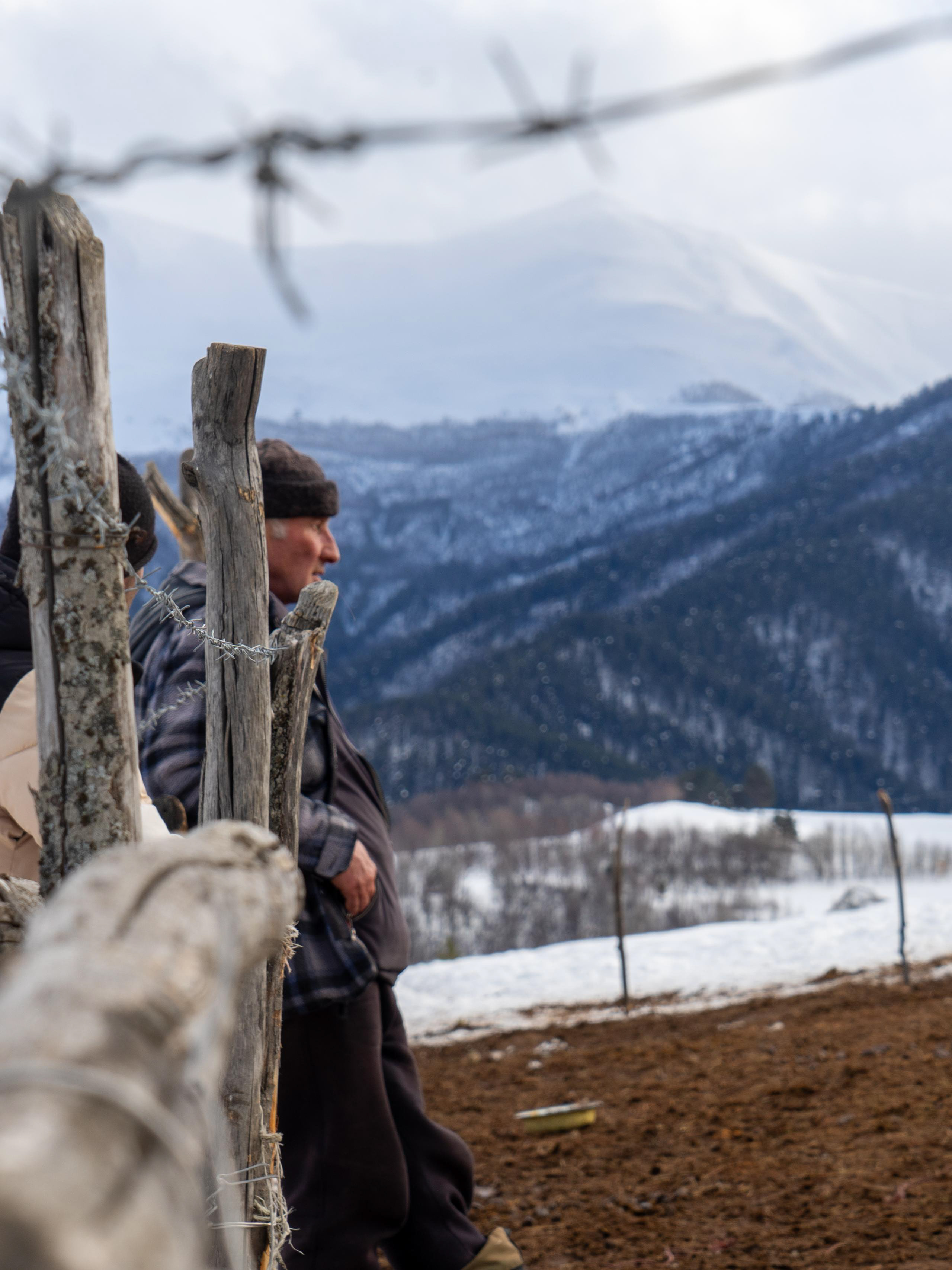
In the 20th century, a large part of the towers lay in ruins. Since 2003, several have been restored using local traditional techniques. The same stones are used to build sacred places: chapels, sanctuaries, or small oratories. They still play an important role in village life today. During local festivals, men gather there to celebrate. They drink chacha, the traditional spirit, around the sanctuary. Shepherds also use stone for their homes and shelters. The walls protect from cold and wind, and sometimes serve to form enclosures for livestock. The constructions are simple and functional: dry-stone walls and a wooden or stone roof covered with earth. An ancient know-how, passed down from generation to generation, and a way of life closely tied to the mountain.