Sheep's wool is one of the oldest fibers used by humans. It comes from sheep domesticated in the Near East and Central Asia. Between 6,000 and 4,000 B.C., it was already used to make clothing and blankets for protection against the cold.
Later, in the Bronze Age and Iron Age, wool became essential for early farmers—for example, wool rugs dating back to the 5th century B.C. have been found in Siberia, used to cover floors and protect against the cold.
Wool retains heat, breathes, and resists moisture well because its crimped fiber traps a lot of air: this still air acts as a natural barrier against cold or heat. It also allows wool to absorb up to nearly a third of its weight in water without feeling wet, helping regulate temperature and humidity: in a coat or blanket, wool keeps the body warm without becoming damp to the touch.
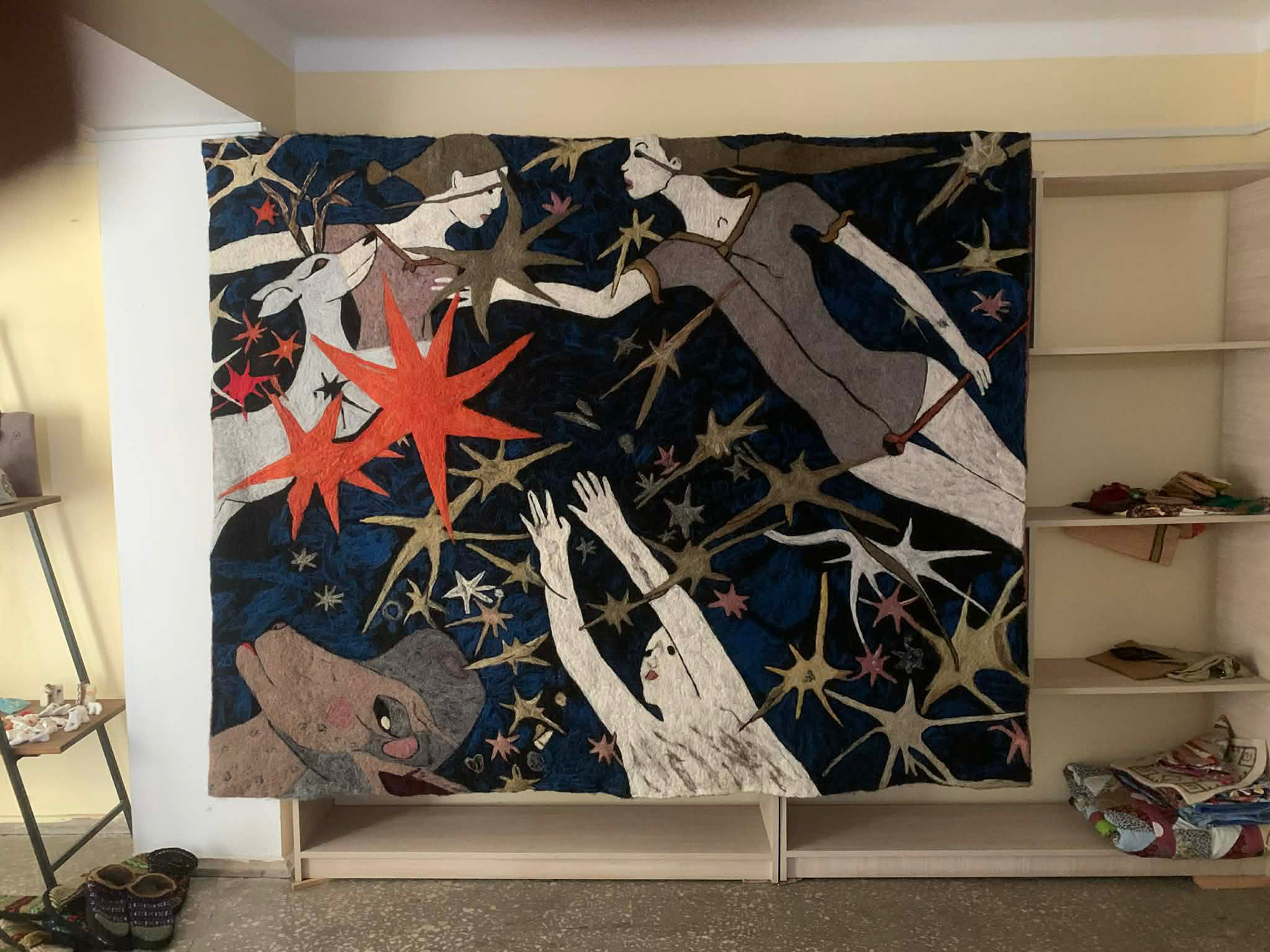
Beyond clothing, wool felt is obtained when fibers interlock under the effects of heat, water, and movement; it becomes a dense material that traps air, making it even more insulating against cold and even sound. It was long used for hats, cushions, or decorations, and even to reduce noise or insulate walls because it dampens vibrations and sounds. In house or building insulation, wool panels or bulk serve to prevent heat from escaping in winter and to limit overheating in summer.
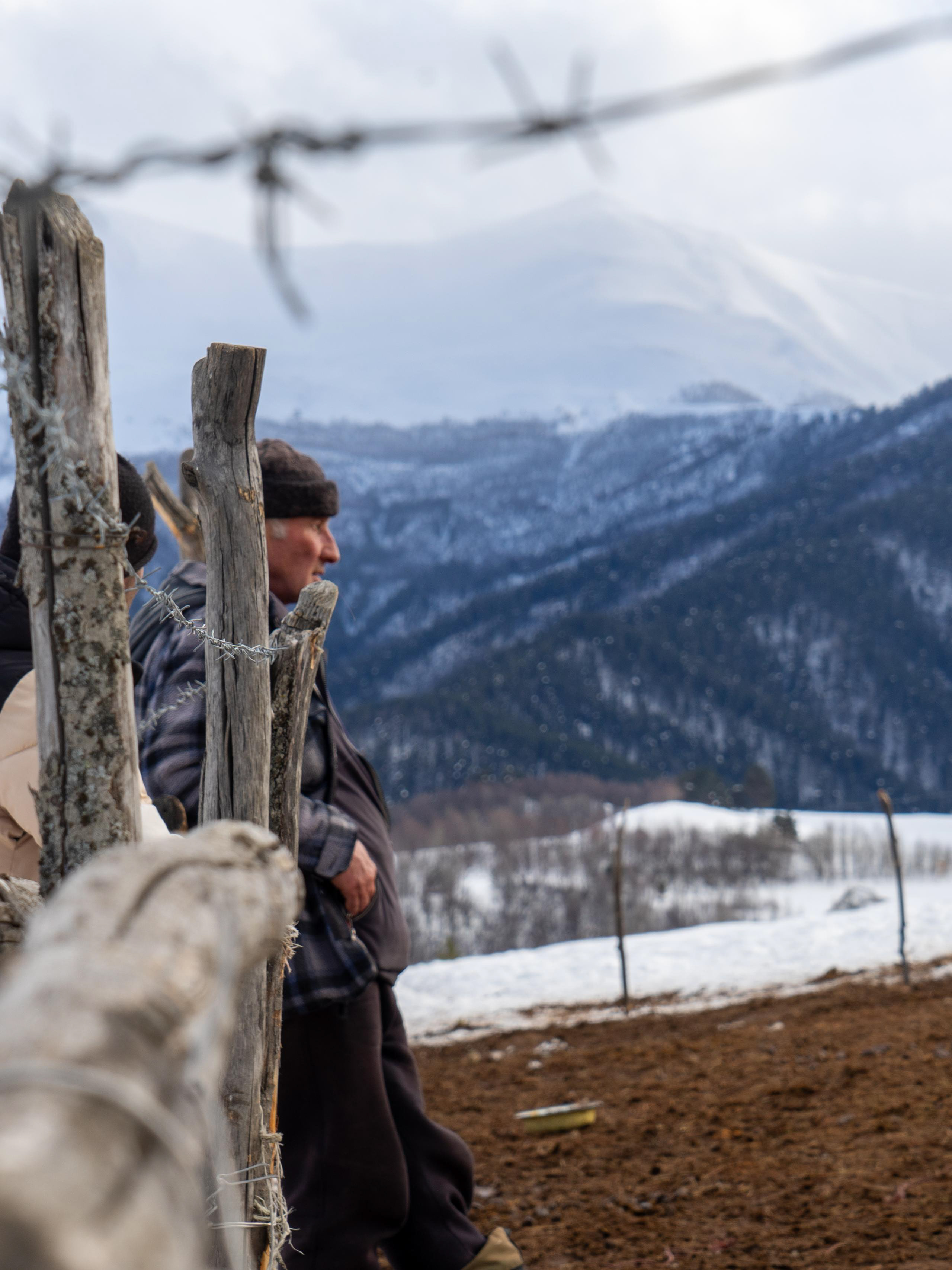
In Tusheti, wool is not just a material; it organizes almost all material and symbolic life. Shepherds raise a sheep breed adapted to high mountains, whose wool—softer and stronger than that of other Caucasian breeds—is the basis of ancestral craftsmanship.
Felt is at the heart of this culture: in autumn, when the air is still warm, the longest fibers are selected and worked with water and pressure until they interlock and form a dense fabric, a practice mainly transmitted by women. From this material comes the Nabadi, this thick felt cloak-cape worn by shepherds: it can weigh up to ten kilos, be nearly waterproof, and serve as clothing, blanket, or even bedding in cold pastures.
They also transform wool into rugs, kilims, or pardags—woven or felted fabrics decorated with geometric motifs and symbols inherited from local tales; these pieces serve both indoors and outdoors, and under saddles.
Every gesture, from shearing to felting, from fiber selection to rug motifs, is not merely utilitarian: it reflects a deep connection with the landscape, the harsh climate, and the history of the Tushetians, where wool becomes a living material like the mountains it clothes.