Weaving rugs in Georgia dates back to the 5th century B.C. and is rooted in long-standing artisanal traditions. The first knotted rugs are believed to have appeared between Mongolia and Turkestan. Excavations in Scythia uncovered the Pazyryk carpet, preserved for over 2,500 years. Located at the crossroads of several cultures, Georgia was influenced by Persian, Ottoman, and Caucasian styles, evident in the motifs and colors.
In the Middle Ages, the country was a major trade hub, fostering the development of weaving. In the Caucasus, both knotted rugs and flat-woven pieces like pardags or khurjins are made on looms. These items were often crafted by nomadic tribes to protect against mountain cold and harsh living conditions.
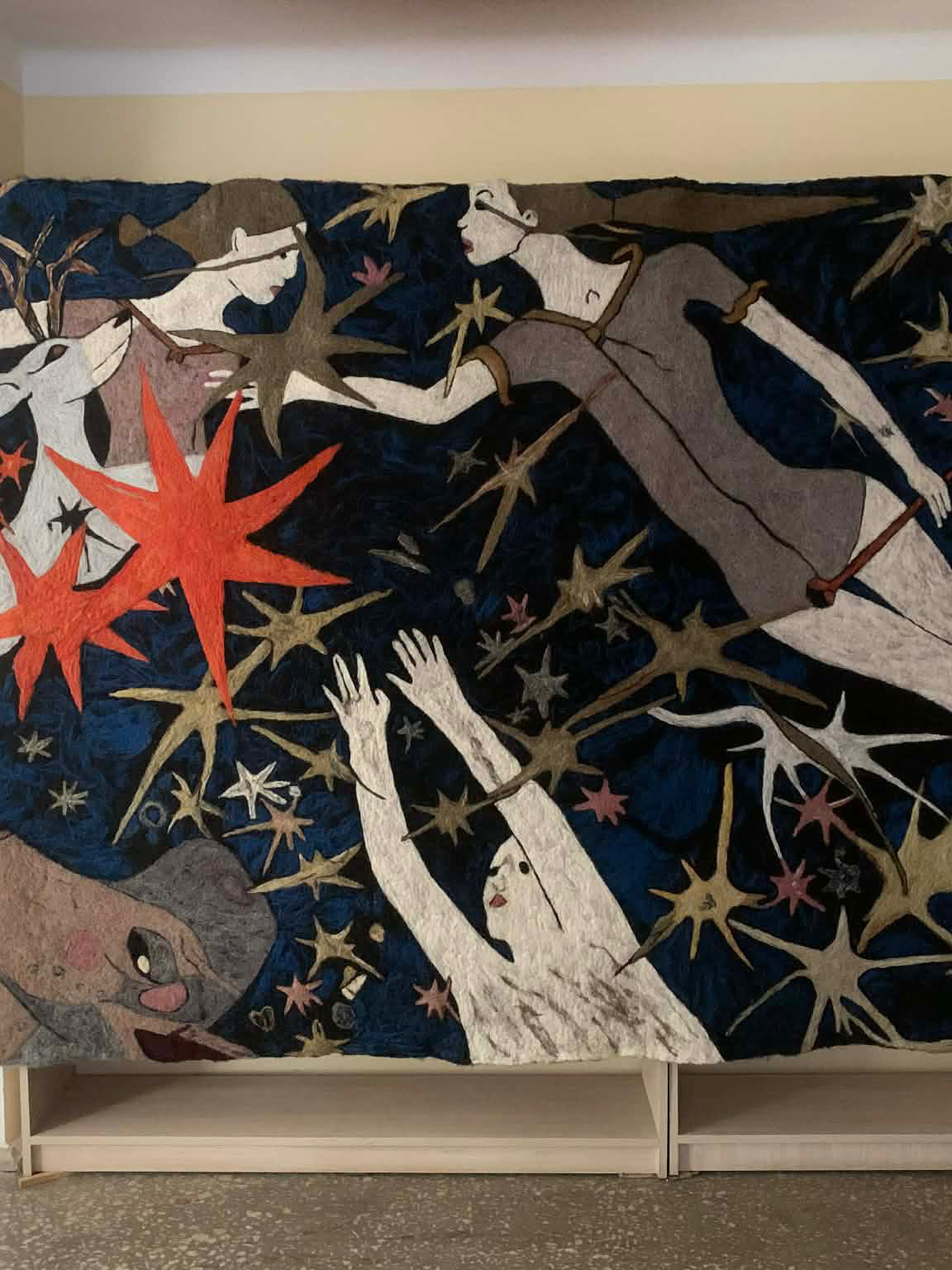
In Tusheti, traditional rugs include khurjins—large woven wool saddlebags used to carry belongings during travel—and pardags, flat decorative rugs with geometric or figurative patterns. These objects blend practical function and symbolism. Sheep's wool, sturdy yet soft, is favored; Tushetian shepherds still prepare the wool themselves for weaving and felting. Each rug tells a story: the small weaving irregularities reflect the artisans' worldview, and imperfection is part of the object's beauty and uniqueness.
The motifs evoke nature, transhumance, and pastoral life, but also everyday elements like wine. Some khurjins and pardags also celebrate significant events, such as a child's birth. These traditions endure today, passed down from generation to generation by women. The same motifs and colors appear on horse rugs placed under saddles.