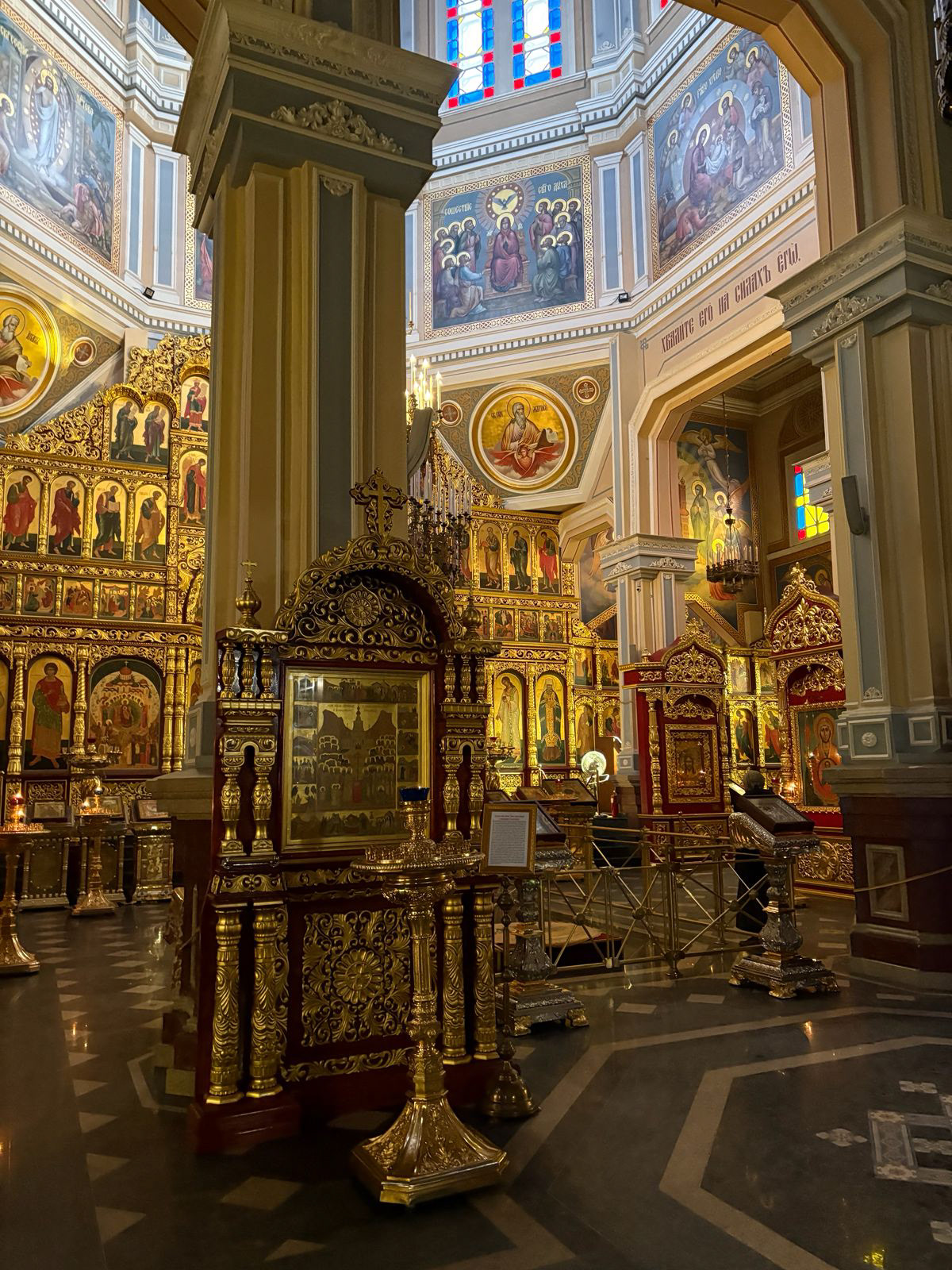
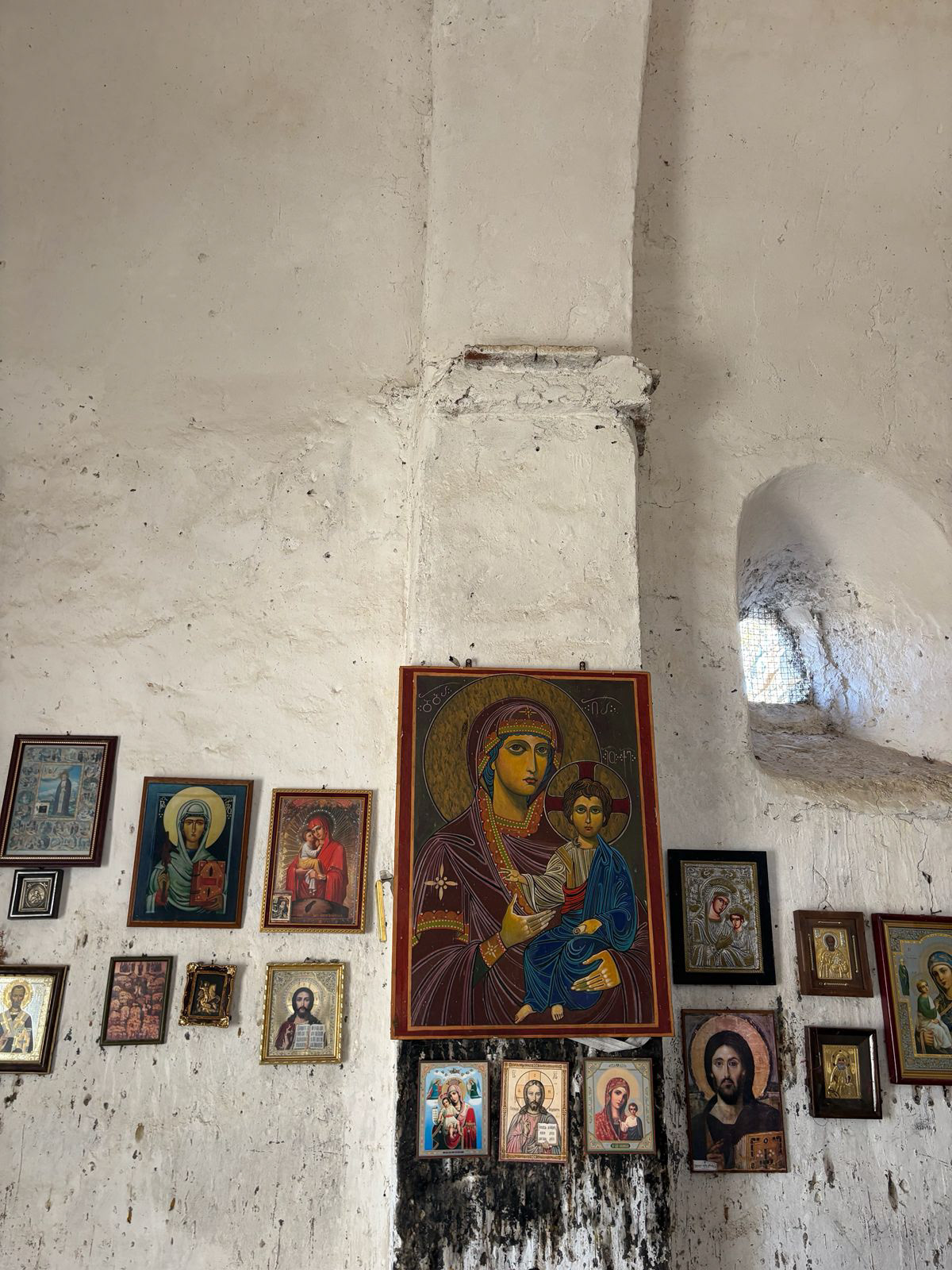
Icons hold a very important place in the Orthodox religion, especially in Georgia. They are not just religious images. For believers, they are a way to pray and to connect with the divine.
The icon comes from the Eastern Christian world, particularly from the Byzantine Empire. Georgia, which converted to Christianity in the 4th century, very early developed its own tradition.
The first icons were often inspired by Byzantine models. They were simple, with little decoration, but very codified. One does not paint an icon freely: every position and every color has a precise meaning. An icon is generally painted on wood. The most commonly used wood is linden or other local woods, which are strong and easy to work with.
The process is done in several stages: first, the wooden panel is prepared; then a white layer (called gesso) is applied; the outlines of the figure are drawn; then it is painted using natural pigments mixed with egg (tempera technique); and finally, gold leaf may be added, especially for the background.
Painting an icon requires time and precision. In the Orthodox tradition, it is often said that the iconographer “writes” an icon rather than paints it. Icons use many symbols.
The golden background represents divine light. The figures are often shown facing forward to create a direct connection with the viewer. The eyes are large: they symbolize spiritual vision.
Colors also have meaning: blue can represent the divine, red life or sacrifice, and white purity.
The proportions are not realistic. The goal is not to create a faithful portrait, but to show a spiritual reality.
Georgia is one of the first countries to have adopted Christianity, at the beginning of the 4th century (around 337). This conversion is linked to Saint Nino, a very important figure in the country’s history. She introduced Christianity to Georgia, and since that time, icons have held a central place in religion.
Icons are present in all churches and monasteries. Some of the most beautiful icons can be seen in important places such as the Gelati Monastery, Svetitskhoveli Cathedral, and Jvari Monastery.
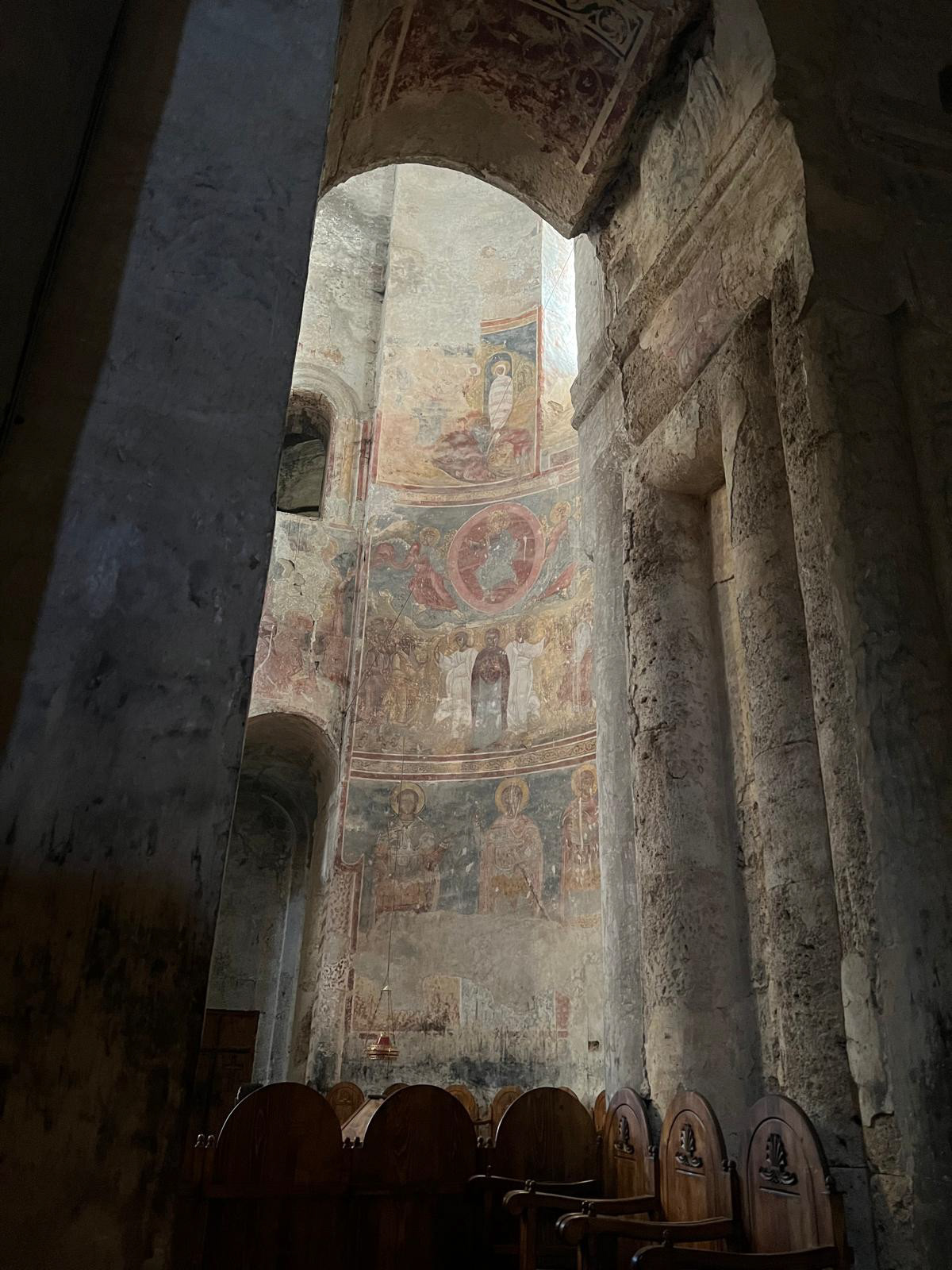
These places are ancient and very important in the Georgian Orthodox tradition. They preserve icons, as well as frescoes and religious objects.
Icons also have a place in everyday life. Many families have one at home. They are used for prayer, but also as symbols of protection.
During the Soviet period (1921–1991), religion was forbidden or strictly controlled. Many churches were closed, and some icons were hidden by families or monks to protect them. This explains why some ancient icons have survived to this day.
There are very old icons, sometimes dating back to the Middle Ages, preserved in isolated monasteries, especially in mountainous regions. Some icons are considered miraculous and still attract many pilgrims today.
Georgian icons are both religious objects and important elements of the country’s history. They appeared from the very beginning of Christianity in Georgia, with Saint Nino, and continue to be used today. Their creation follows precise rules, and their role goes beyond art: they are connected to prayer, memory, and the culture of the country.